
Let's talk about knives: A complete guide to the basics of knife steel, essential for any adventurer.

A good knife requires many essential elements.
But the most important point is the knife owner’s own preference.
Some people like stainless steel, and some people like high carbon steel.
Some people like frame locks, others like liner locks.
Some people like to open the fin quickly, and some like to push the knife post.
Some people like artificial handle materials, such as Micarta, G10...
But some people like natural handle materials, such as wooden handles, fossilized mammoth ivory...
Whether it’s the steel, the locking, the handle material, the design…
Each of these components of a knife can be divided into many types.
For example, knife locks include back lock, shaft lock, frame lock...
For example, knife handle materials include stainless steel, titanium alloy, aluminum alloy...
For example, the steel materials of knives include stainless steel and high carbon steel.
Under these segments, there is a type for everyone.
Steel is what many new knife enthusiasts are most concerned about.
There are many types of steel on knives, and each type of steel has different uses, prices, and properties.

Today we have a summary of steel products.
Although it is a summary, what will be selected here are more steel materials that are used more frequently and are more popular in the market.
There are several important factors in the selection of steel: hardness, toughness, corrosion resistance, edge sharpness retention, and wear resistance.
These points are the most important conditions for steel selection, and are directly related to the use and performance of steel.
Of course, it is also directly related to how you choose knives based on steel.
Hardness, toughness, corrosion resistance, edge sharpness retention, and wear resistance of steel.
These things were not created haphazardly.
This involves the alloying elements of steel.

The alloying elements of steel play a vital role in the performance of steel.
That's the boring stuff we learned in chemistry class.
Carbon (C), Chromium (Cr), Molybdenum (Mo), Nickel (Ni), Vanadium (V), Cobalt (Co), Manganese (Mn), Silicon (Si), Niobium (Nb), Tungsten (W)
It makes you confused and gives you a headache just looking at it, doesn’t it?
It doesn’t matter, let’s just say it briefly.
Carbon:
Carbon is the most important element in steel.
Its function is to increase the hardness and wear resistance of the blade, improve the sharpness retention and tensile strength of the blade.
Chrome:
Chromium plays a key role in the blade's rust and corrosion resistance.
It improves the blade's corrosion resistance, hardness, toughness and tensile strength.
Cobalt:
Cobalt, used together with other elements, can improve the performance of composite steel and increase the strength and hardness of the steel.
Copper:
Improve the wear resistance and corrosion resistance of steel.
Manganese:
Can maximize hardening levels.
Improve the wear resistance and tensile strength of steel.
Molybdenum:
Molybdenum makes steel easier to process.
Improve the hardening ability, toughness and strength of steel and prevent it from becoming brittle.
Nickel:
Increases corrosion resistance, hardness and strength of steel.
Phosphorus:
Improve the workability, hardness and strength of steel.
However, the concentration of phosphorus cannot be too high, as it can easily cause the steel to become brittle.
Silicon:
Improve the tensile strength and yield strength of steel.
Sulfur:
Sulfur can improve the machinability of steel, but it will reduce the toughness of steel.
Tungsten:
Tungsten can increase the strength, hardness and toughness of steel.
Vanadium:
Improve the strength, hardness and impact resistance of steel, and enhance the ductility of steel.
In addition to the ones mentioned above, there are also elements such as aluminum (Al), boron (B), niobium (Nb), nitrogen (N), lead (Pb), etc.
However, these elements are rarely used, so they are not listed.

The steel used in knives can be mainly divided into two types: carbon steel and stainless steel.
The standard for distinguishing carbon steel from stainless steel is the carbon content and chromium content in the steel.
In stainless steel, chromium is the main element. Generally, a chromium content of ≥13% can be considered stainless steel.

There are three types of carbon steel: low carbon steel, medium carbon steel, and high carbon steel.
In carbon steel, our common expression is 10XX.
For example, 1095, 1075, 1045... this kind of expression.
The XX after 10 represents its carbon content. For example, 1095 means that its carbon content is 0.95%.
1095:
Among the major knife manufacturers, the most common carbon steel is 1095.
1095 high carbon steel is one of the most common and widely used carbon steels on the market.
1095 is a high carbon steel with a carbon content of 0.95%~1.03%. After heat treatment, it can be processed to a high hardness of 57-60HRC.
Carbon steel is easy to sharpen and has excellent wear resistance and edge retention.
One thing is that it rusts easily, but to deal with this shortcoming, knife manufacturers will coat the surface of carbon steel knives with a coating to increase the corrosion resistance of the blade. As long as you pay attention to daily cleaning and maintenance, you can prevent it from rusting.
1095 is most commonly used in fixed blades for outdoor use. For example, TOPS, ESEE, Kabbah and other brands of products often use 1095 high carbon steel.
1075:
Followed by 1075, 1075 is a medium-high carbon steel. Compared with 1095, its occurrence rate is not too high. TOPS will use 1075 medium-carbon steel.

1080:
1080 is a steel material that replaces 1084.
Except that it has slightly less carbon content than 1084, they are almost identical in other respects.
Due to the reduced carbon content, 1080 becomes tougher.
But also because of the reduced carbon content, its wear resistance and hardness are both lower than 1095.
1080 is a steel that is ideal for use on large knives that will see heavy use.
1070:
1070 is very similar to 1080, but 1070 has a lower carbon content.
1070 is tougher than 1080, but has lower wear resistance and hardness than 1080.
1055:
1055 is a very hard steel, stronger than the 10XX series mentioned above.
However, its biggest disadvantage is that it is not wear-resistant and has low toughness.
1055 is often heat treated and tempered to further enhance its toughness.
This steel is used heavily for blades where wear resistance is not required, like swords.
5160:
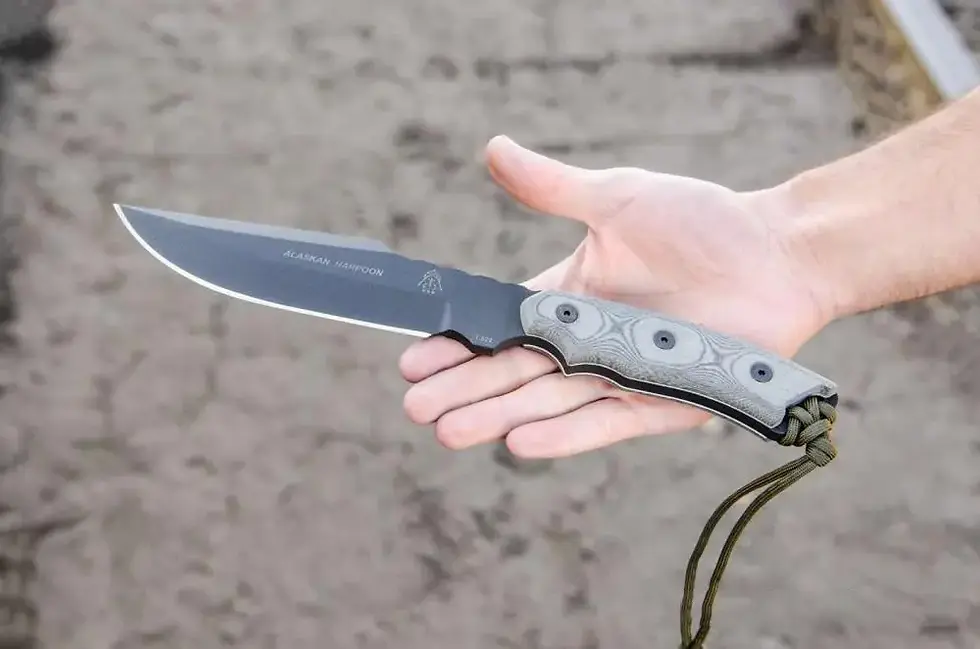
5160 alloy steel, also known as AISI 5160.
It is a high carbon spring steel with excellent toughness, ductility and fatigue resistance.
Although its various properties such as wear resistance are excellent, it is famous for its excellent toughness.
Its carbon content is usually around 0.56-64%.
However, 5160 is more difficult to process, and tool manufacturers using it include TOPS, Dawson, Winkler, etc.
INFI:
This is Bath's special steel with high hardness, high wear resistance and impact resistance.
Its rust resistance is also outstanding, and it has strong toughness and lateral strength.
YXR7:
This is a type of steel commonly used by Hanadayo. It has high hardness, high wear resistance, strong processability and hardenability.
But it is easy to rust and difficult to process.
To solve this problem, Hanadayo will apply a coating on the blade to enhance the corrosion resistance of the blade.

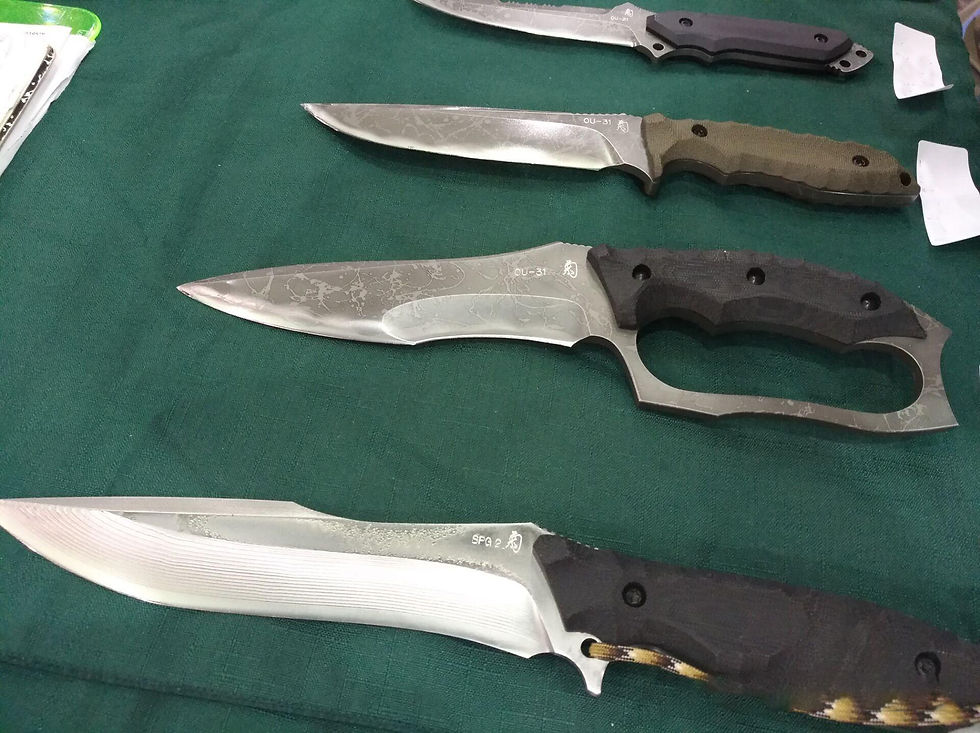
OU-31:
This is a type of steel commonly used by Matsuda Kikuo and is very wear-resistant.
Its hardness is very high, up to 64HRC.
It has strong impact resistance, so Matsuda Kikuo now mostly uses OU31 instead of D2 steel.
D2:
D2 is actually semi-stainless steel.
Because its chromium content reaches 12%.
It is also a steel commonly used by Matsuda Kikuo.
It is often used on machetes and hunting knives.
However, it has poor rust resistance, but is tough and has excellent edge sharpness retention.

S30V:
This is a type of steel developed by American Crucible Industries in partnership with Chris Reeve and is a powdered stainless steel.
Launched in 2001, S30V is a high-quality steel that is durable, corrosion-resistant, and maintains its edge sharpness.
It’s arguably one of the best knife steels on the market.

S35VN:
S35VN is a stainless steel developed on the basis of S30V.
It was launched in 2009 and is significantly different from the S30V.
This difference is directly reflected in its name. It has an extra "N" than the S30V, which is niobium.
Because niobium is used instead of vanadium, and molybdenum is added, it is easier to machine, grind, and polish.
S35VN is tougher and the blade’s wear resistance is not reduced at all.
It is precisely because of these characteristics that from a process perspective, tool manufacturers may prefer to use S35VN instead of S30V.
For some extreme-use fixed blades, manufacturers will also choose S35VN steel to improve the toughness of the blade. For example, CRK's Pacific and Beret use S35VN.
S35VN and S30V are both high-quality knife steels, but we cannot feel the slight difference between the two in actual use. Unless it is a professional test experiment, most knife lovers will not be able to feel the difference between the two.
S60V:
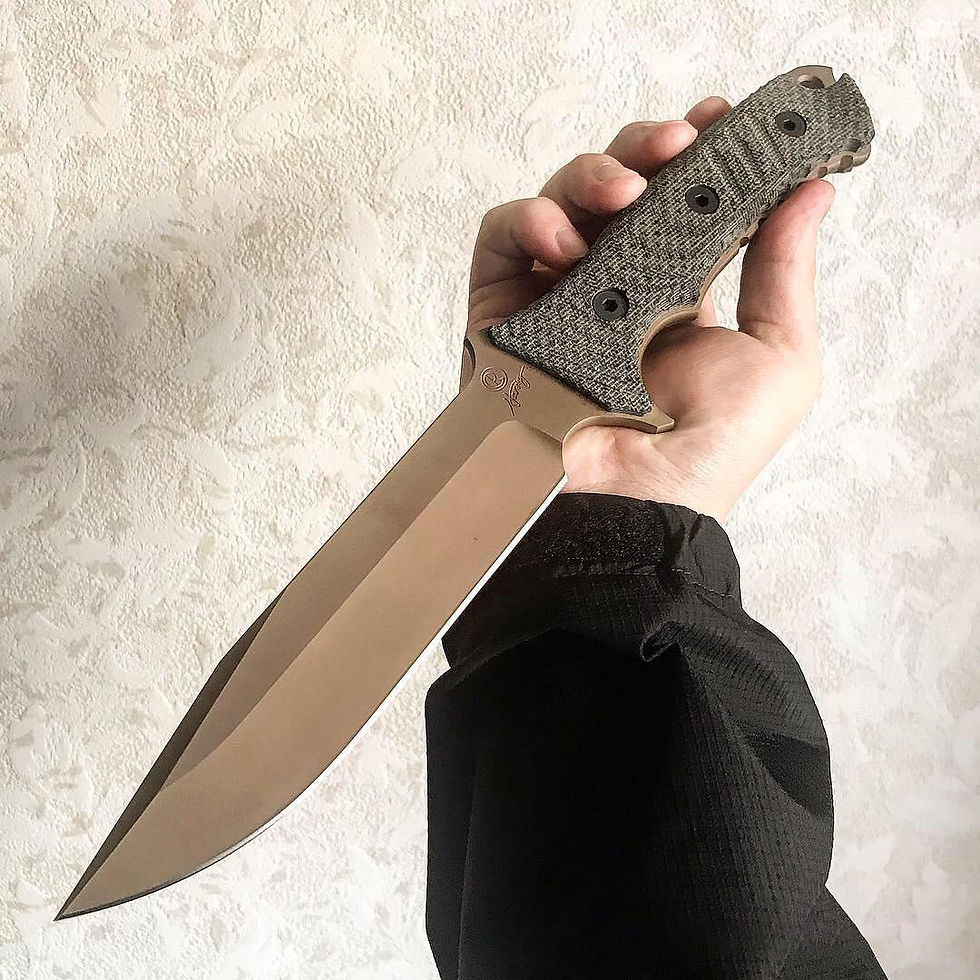
This steel has high wear resistance and a high vanadium content.
However, this kind of steel is not commonly used and is mostly used in handmade knives.
S90V:
The S90V's blade maintains its sharpness very well, but it is difficult to sharpen.
Currently, the S90V is most commonly used for custom-made knives, and the price is not cheap.
S110V:
S110V is often used to make folding knives. Its niobium content is very high, reaching 3%.
It has strong corrosion resistance and wear resistance, but slightly lower toughness.
CPM 20CV:
CPM 20CV has a high chromium content of 20% and has excellent corrosion resistance.
The toughness of CPM 20CV is comparable to that of 440C, but the wear resistance of CPM 20CV is five times that of 440C.
Its toughness, wear resistance and corrosion resistance are the best, and its blade sharpness retention is also good, but this also makes it difficult to polish.
Knife manufacturers such as Butterfly and Zero Error use it as one of their knife steel choices.
CPM-S125V:
S125V is a high carbon, high vanadium steel.
Its hardness reaches 59-65, which improves the wear resistance and durability of the blade.
The main advantages of this steel are its durability and wear resistance.
However, it is difficult to process and costly, so only high-end knives use this steel.

CTS-XHP:
CTS-XHP is a steel product developed by Carpenter Company of the United States.
CTS XHP is an air-hardening, high-carbon, high-chromium, corrosion-resistant alloy steel.
CTS XHP is a high-quality steel that has the corrosion resistance of 440C stainless steel, but its hardness can reach 64 HRC, which is close to the hardness of D2 steel.
This hard and very corrosion-resistant stainless steel is favored by knife manufacturers around the world, with products made from it from Spider, Cold Steel, Advancer, MicroTech and more.
However, its output is not high, which has caused many manufacturers to abandon it and turn to S35VN steel, such as Cold Steel.
M390:
M390 is called Kobelco by knife lovers in China. Its carbon content is 1.9%, and it has several levels of stain resistance and wear resistance.
Russia’s CRK custom knife factory most commonly uses M390 steel.

Maxamet:
This is a steel product introduced by Carpenter in the United States.
The most notable feature of Maxamet is its high carbon content (2.15%) and high tungsten content (10%).
A large amount of tungsten can improve the hardening ability of steel, so the hardness of Maxamet reaches 67-68HRC.
The increased hardness also means Maxamet will be a very wear-resistant steel.
However, this kind of steel is difficult to process, and the price and cost are relatively high. Currently, only a few companies use it, such as Spider, ZT, etc.

ZDP-189:
This is Hanada Yang's favorite steel, and its hardness can reach 67-68HRC.
Its chromium content is very high, reaching 20%, but because it contains 3% carbon, it will still rust in a humid environment.
ELMAX:
ELMAX is a steel product produced by Bohler-Uddenholm Company and belongs to "high chromium vanadium molybdenum alloy steel".
It has high wear resistance, high compressive strength, excellent corrosion resistance and excellent edge sharpness retention.
It is easy to sharpen, making it popular among knife enthusiasts.
This is a relatively new steel material, only launched in 2009.

VG-10:
A type of steel made by Takeo in Japan.
VG-10 stands for V Gold 10, and Gold means gold.
So another meaning of G refers to that this stainless steel meets the "gold standard".
VG-10 can stay sharp for a long time and has high durability.
That’s why it’s popular with everyone from kitchen knives to tactical knives, and from chefs to collectors.
This kind of stainless steel is often seen in pocket knives, hunting knives, and tactical knives.

3G laminated steel:
This is a laminated steel with a core of 3G steel and an outer layer of VG2.
This steel has extremely high edge sharpness retention and durability.
3G laminated powder steel has three times the edge retention of VG10.
It also has high corrosion resistance and sharpness, but is not easy to polish.
In addition, its cost is also very high, and Swedish FK often uses this kind of steel.
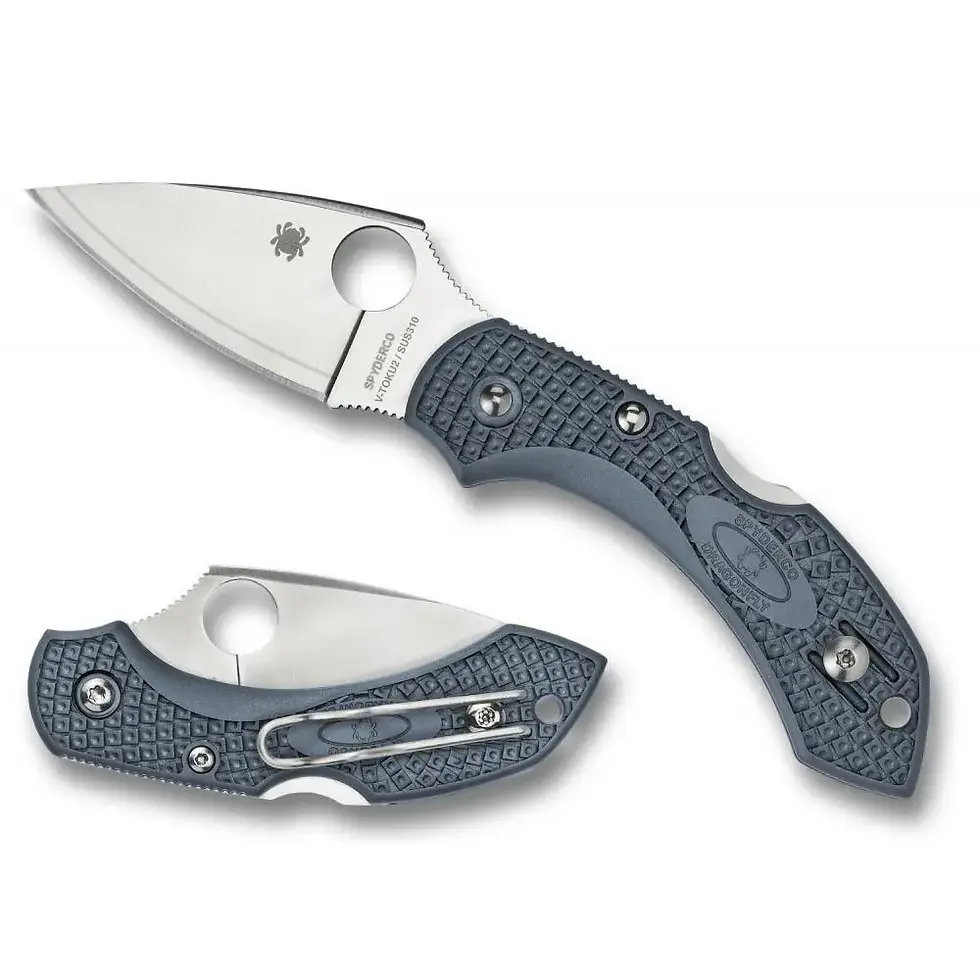
V-Toku2 Laminated Steel:
This is steel produced by Takeo in Japan and made from Swedish iron ore.
It is a steel material with V-Toku2 tool steel as the core and SUS310 stainless steel as the outer layer.
It has always been known for its high hardness and toughness.
A hardness of 65HRC is suitable for kitchen knives, while a hardness of 60-61HRC is suitable for those small knives we like.
Spider's limited edition Sprint Run knives are often made from this steel.
N690:
This is a cobalt stainless steel from Austria.
This kind of steel is very wear-resistant and has high hardness, and is often seen in knives.
Knife manufacturers in Europe like to use this steel.
AUS-10:
A type of steel developed in Aichi, Japan.
It has a high carbon content, and AUS-10 is also the strongest steel in the AUS series.
AUS-10 steel has a high carbon content of 1.05, which results in its high hardness, which can reach 60-62HRC.
Its edge is easily sharpened, resulting in a razor-sharp edge.
AUS-10 knives are not prone to rust and do not require frequent sharpening.
All in all, AUS-10 is strong, relatively tough, resistant to wear and tear, and not prone to rust.
AUS-8, AUS-6:
AUS-8 is similar to 440B, and AUS-6 is similar to 440A.
Among Cold Steel's products, the most commonly used is AUS-8.
However, the AUS series of steels all contain vanadium, but the 440 series does not, so AUS has better wear resistance.

12C27:
This is a steel commonly used by Swedish knife makers such as Mora.
This is a relatively low-cost steel, but its performance is pretty good. You won’t feel bad if the cheap bowl wears out.
420:
The carbon content of 420 is very low, and the sharpness of the blade is relatively poor.
This is a low-cost steel with excellent corrosion resistance.
There is also a kind of 420J steel, which is worse than 420, but its corrosion resistance is also good.
440A, 440B, 440C:
440 A is a low-cost stainless steel. Among the 440 series, 440A is the most rust-resistant, and 440C is the least rust-resistant of the three.
440B is similar to 440A, but the carbon content is higher than 440A.
440C, which is more common in knives, is wear-resistant and has high hardness.
425M:
425M and 440 series steels are relatively similar.
It's not used much, but it can be seen in buck knives.

154CM:
154CM is a steel material developed by the American Crucible Industry and is a high-quality steel.
154CM has high toughness and hardness, as well as excellent toughness and corrosion resistance.
However, later the American Crucible Industry released a CPM154, and unfamiliar friends may confuse them.
CPM154 is a steel material introduced only after the 21st century.
H1:
This is a type of steel developed by a Japanese steel company.
It is a very, very corrosion-resistant steel and is suitable for use by friends at the beach.
Spiders often use it to make diving knives.
Moreover, it is cheap and has excellent machinability, making it a relatively excellent steel.

Carbon steel is mostly used in outdoor knives such as jungle knives, survival knives, and machetes.
Stainless steel is mostly used in folding knives, but of course there are exceptions. S35VN is also used in fixed knives.
There are also some steel materials from our country, such as 8Cr13MoV and 9Cr14MoV.
They are also a very popular steel, and many foreign knife manufacturers (Spider, Butterfly, Cold Steel, SOG, etc.) use them as one of their steel choices.


Comments